
Description
Concrete Fiber Reinforcement Manufacturer in China
Concrete fiber reinforcement refers to the process of adding fibers such as steel fiber, polypropylene fiber, glass fiber, or carbon directly into fresh concrete to enhance its performance and toughness. Our customers no longer rely solely on rebar or wire mesh; instead, they mix short, uniformly distributed fibers directly into the concrete. This method strengthens the structure from within, reduces project costs, and improves overall construction quality.
 |
 |
 |
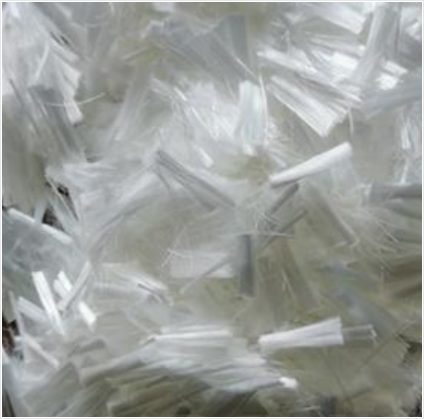
| polypropylene fiber for concrete(PP Fibers) Density(g/cm³): 0.91-0.93 Length (mm): 3-51 Diameter (µm): 15-48 Tensile Strength (MPa): 560+ Elastic Modulus (MPa): 3500 Acid and Alkali Resistance: Greater than 96% Other: Customizable lengths available |
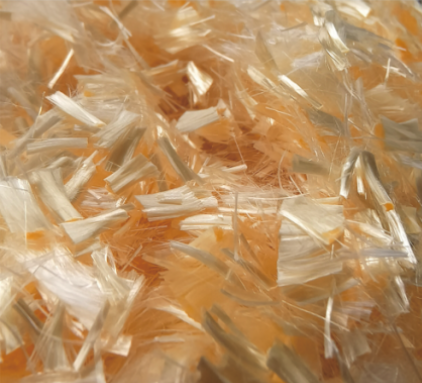
Polyacrylonitrile Fiber (PAN Fiber) •Density(g/cm³): 1.18-1.2 •Length (mm): 3-50 •Diameter (µm): 8-30 •Tensile Strength (MPa): 500+ •Elastic Modulus (MPa): 6000+ •Acid and Alkali Resistance: Greater than 95% •Customization: Custom specifications available upon request. Lengths range from 3-50mm and diameters from 8-30µm. |
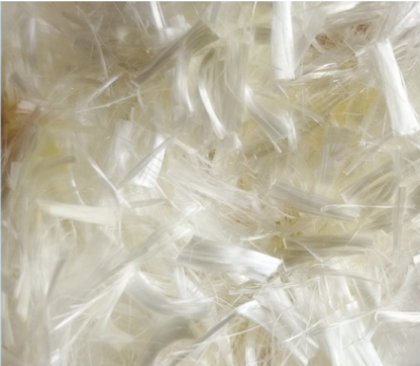
polyvinyl alcohol fiber(PVA Fiber) Density(g/cm³) 1.01-1.16 Length (mm): 3-50 Diameter (µm): 15 ± 3 Tensile Strength (MPa): 1200 Modulus of Elasticity (MPa): 3500 Acid and Alkali Resistance: Greater than 98% Applications: Concrete pouring, precast components, lightweight wall panels, GRC panels, insulation boards, etc. |
 |
 |
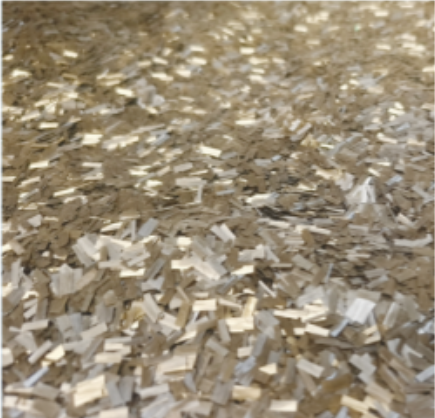 |
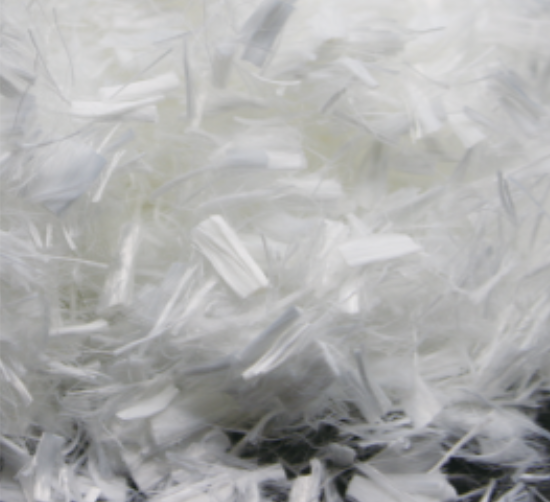
| Polyester fiber (PET fiber) Density(g/cm³): 1.36-1.38 Length (mm): 3-50 Diameter (µm): 8-30 Tensile strength (MPa): 500+ Elastic modulus (MPa): 3500 Acid and alkali resistance: >92% Customization: Custom lengths available, suitable for asphalt concrete |
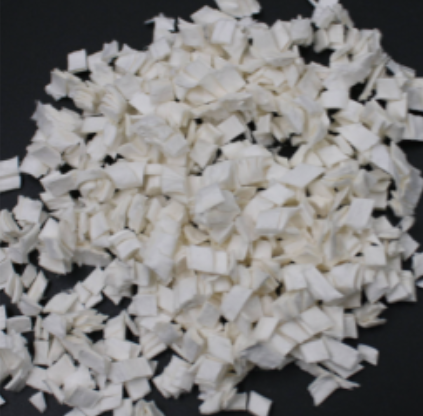
Cellulose Fibers Density(g/cm³): 1.0-1.2 Length (mm): 6 Diameter (µm): 15-20 Tensile Strength (MPa): 500-1000 Elastic Modulus (MPa): 8000+ Acid and Alkali Resistance: Greater than 95% Note: Because short, thin fibers are difficult to store and transport, they are typically packaged in flat blocks. |
Basalt Fiber Density(g/cm³): 2.6-2.8 Length (mm): 5-50 Diameter (µm): 7-25 Tensile Strength (MPa): 1050+ Elastic Modulus (MPa): 35,000 Acid and Alkali Resistance: Greater than 95% Application: Basalt fiber is suitable for densely packed asphalt concrete, mastic asphalt macadam mixtures, and various cement concretes. |
 |
 |
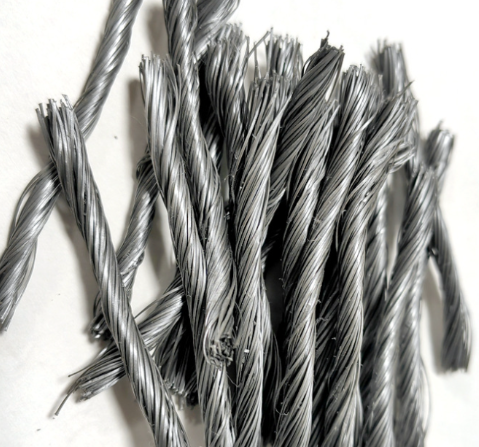 |
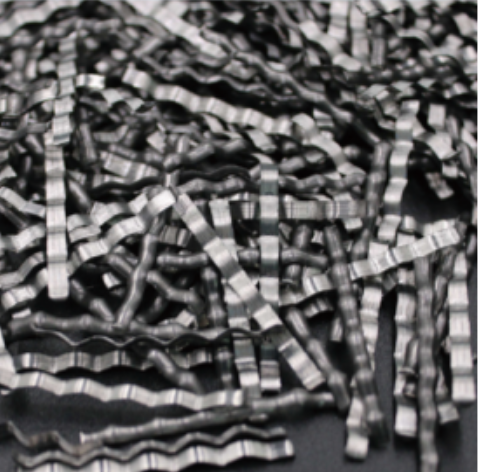
| Steel fibers for concrete Density(g/cm³): 7.6-7.8 Length (mm): 10-60 Diameter (µm): 0.1-1.0 Tensile strength (MPa): 380-2850 Modulus of elasticity (MPa): 20,000 Acid and alkali resistance: Average, prone to rust Note: Available in a variety of sizes, different specifications can be selected based on the application. |
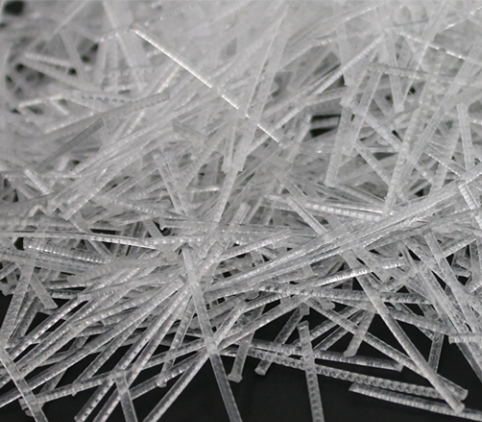
Imitation Steel Fiber Density(g/cm³): 0.91-0.98 Length (mm): 20-60 Diameter (µm): 0.8mm ± 0.2 Tensile Strength (MPa): 450+ Elastic Modulus (MPa): 3500 Acid and Alkali Resistance: Greater than 98% Customization: Custom specifications available. |
Polypropylene Twisted Fiber Density (g/cm³): 0.91 Length (mm): 40, 50 (customizable) Diameter (mm): 0.1-0.3 Tensile Strength (MPa): >500 Elastic Modulus (MPa): >5 GPa Elongation at Break: ≥15-25 Customization: Custom specifications and colors are available. |
Advantages of Concrete Reinforcing Fibers
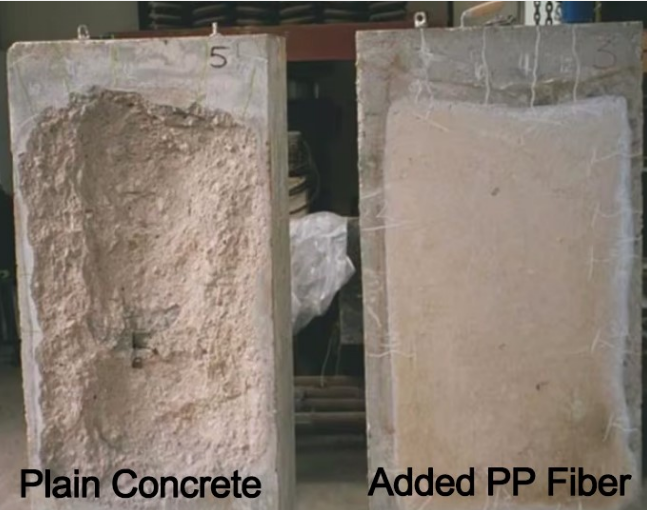
Improved Crack Resistance
Concrete reinforcement fibers effectively prevent the formation and propagation of cracks caused by shrinkage, thermal stress, or impact. The fibers are evenly distributed throughout the concrete, forming a multi-directional reinforcement network. Stronger internal bonds and lasting surface integrity reduce maintenance issues and enhance appearance.
Increased Flexibility
Fiber-reinforced concrete exhibits exceptional flexibility and toughness. Fibers enable the material to absorb more energy before breaking, increasing its load-bearing and deformation capacity.
Excellent Durability
Fiber-reinforced concrete offers excellent resistance to impact, fatigue, and environmental wear. The addition of fibers reduces permeability, preventing water penetration and protecting the structure from corrosion, freeze-thaw cycles, and chemical attack.
Applications of Fiber Reinforced Concrete

1. Suitable for waterproofing, flooring, and interior and exterior walls in industrial and civil construction projects, ensuring structural performance and longevity.
2. Effectively reduces cracking in industrial workshops, warehouses, parking lots, and factory floors, maintaining a smooth, durable surface with low maintenance costs.
3. Strengthens the floors of natatoriums, swimming pools, ponds, and drainage ditches, providing excellent resistance to water seepage, shrinkage cracking, and long-term aging.
4. Suitable for a variety of applications, including mortar work, plastering, tile substrates, and fine aggregate concrete, ensuring uniform fiber distribution and reliable performance.
Fiber Reinforced Concrete Vs Rebar
| Feature | Fiber Reinforced Concrete (FRC) | Rebar (Steel Reinforcement) |
| Reinforcement Mechanism | Fibers are distributed throughout the concrete, reinforcing it internally and controlling micro-cracks in all directions. | Steel bars provide localized tensile strength only along their placement. |
| Crack Control | Excellent at reducing shrinkage cracks, improving surface quality, and controlling crack propagation. | Prevents structural failure but does not stop micro-cracks in the concrete matrix. |
| Durability | Improves impact resistance, fatigue resistance, and overall lifespan of concrete structures | Provides structural support but limited effect on concrete durability and crack prevention. |
| Workability | Easily mixed into fresh concrete without altering the mix ratio; faster and simpler installation. | Requires careful placement, spacing, and labor-intensive installation. |
| Cost Efficiency | Can reduce or replace traditional steel reinforcement, saving material and labor costs. | Material and installation costs are higher; labor-intensive process. |
| Best Applications | Industrial floors, pavements, precast components, slabs, tunnels, and areas prone to cracking. | Structural beams, columns, bridges, and large-scale load-bearing elements where design codes require steel reinforcement. |
FAQ
Q: Can fiber completely replace rebar or wire mesh?
A: In many applications, fiber can partially or completely replace traditional rebar, particularly in floor slabs, pavements, and industrial floors. However, for structural beams, columns, or large load-bearing members, it is recommended to combine fiber with rebar to meet design specifications and safety requirements.
Q: What is the appropriate fiber dosage in concrete?
A: The optimal fiber dosage depends on the fiber type, concrete mix, and project requirements. Typically, fiber dosages for industrial and precast applications range from 0.5% to 2% by volume of concrete. It is best to consult your fiber supplier to determine the ideal dosage for optimal performance and workability.
Q: Does fiber reinforcement affect the workability of concrete?
A: High-quality fibers disperse easily without changing the mix ratio, so they have minimal impact on workability.
Q: What are additives in asphalt concrete?
A: Additives are materials added to asphalt or concrete mixtures to enhance specific properties, such as durability, adhesion, flexibility, or water resistance. Examples include fibers, polymers, chemical stabilizers, and mineral fillers.
Q: Can you recommend some additives that can enhance the performance of pavement concrete?
A: Yes! Common additives for road and pavement concrete include polypropylene fibers for crack control, silica fume for strength, plasticizers for improved workability, and air-entraining agents for freeze-thaw resistance.


 English