
Precast concrete structures are widely used in modern construction for their durability, efficiency, and versatility. This comprehensive guide explains everything you need to know about precast concrete, including its types, benefits, applications, manufacturing process, and maintenance considerations.
What is Precast Concrete?
Precast concrete refers to concrete components that are cast and shaped in a controlled environment (usually in a factory or dedicated workshop) and then transported to the construction site for installation. Unlike traditional on-site cast concrete, precast concrete components are manufactured before being placed in their final position, allowing for more precise manufacturing, stricter quality control, and faster construction.
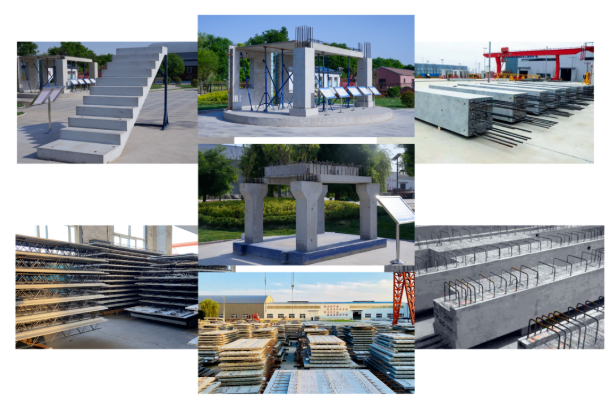
Key characteristics of precast concrete:
Controlled manufacturing: Produced in a controlled factory environment for superior quality.
Durability: Resistant to environmental erosion and wear.
High strength: Carefully designed to deliver optimal performance in a variety of applications.
Versatility: Suitable for a wide range of building needs, including residential, commercial, and infrastructure projects.
Types of Precast Concrete Components
Precast concrete comes in various shapes and sizes, each designed for different building applications. Some common types of precast components include:
- Precast Concrete Wall Panels
These wall panels are used for walls and offer excellent thermal and sound insulation. They can be used for interior and exterior walls in commercial and residential buildings. - Precast Concrete Floor Slabs
Floor slabs are used for floors and roofs, providing structural support while reducing construction time. - Precast Concrete Beams
Beams are used to support vertical loads and are commonly used in large buildings, bridges, and overpasses. - Precast Concrete Stairs
Precast stairs facilitate the installation of staircases in multi-story buildings. They are durable, quick to install, and save construction time. - Precast Concrete Pipes and Access Holes/Precast Concrete Pipes and Manholes
Commonly used in utilities such as water supply, sewage, and stormwater drainage systems.
Advantages of Precast Concrete
Compared to traditional construction methods, precast concrete offers several advantages:
- Quality Control
Precast concrete components are produced in a controlled environment, ensuring consistent product quality. This minimizes the risk of defects and ensures that each component meets stringent engineering standards. - Faster Construction Cycles
Because precast concrete components are produced off-site, on-site construction time is significantly reduced. Furthermore, since components are produced indoors, the impact of weather on construction progress is minimized. - Durability
Precast concrete structures possess strong weather resistance, resisting the effects of environmental factors such as humidity, fire, and temperature fluctuations. They are ideally suited for harsh climatic conditions and areas with frequent seismic activity. - Cost-Effectiveness
Precast concrete is more cost-effective than traditional construction methods due to reduced labor costs, shorter construction time, and fewer maintenance requirements. The longer service life of precast structures also reduces maintenance needs.
Precast Concrete Production Process
The production of precast concrete involves several key steps to ensure the components meet the highest standards. These steps include:
- Mold Preparation: Molds are designed and fabricated according to the requirements of the precast components. These molds are typically made of steel or fiberglass and coated with a release agent to ensure easy demolding of the finished concrete.
- Reinforcement Placement: Reinforcing bars or steel mesh are placed inside the molds according to design specifications. These bars enhance the strength of the concrete.
- Concrete Pouring: High-strength concrete is poured into the molds, covering the reinforcing bars. Vibration is usually performed to remove air bubbles and ensure the concrete mixture is dense and homogeneous.
- Curing: The concrete is cured in a controlled environment, with temperature and humidity monitored to ensure optimal strength development.
- Demolding: After the concrete has cured, the precast components can be removed from the molds and transported to the construction site.
Maintenance of Precast Concrete Structures+
Precast concrete structures are renowned for their durability, but like all materials, they still require some maintenance to ensure they remain in optimal condition for the long term.
- Regular Inspections
Regularly inspect precast concrete components for signs of wear, cracks, or water seepage. Early detection prevents further damage and reduces maintenance costs. - Cleaning
Regular cleaning helps maintain the appearance of precast components, especially in areas susceptible to contaminants or harsh weather. - Crack Repair
If cracks appear, they should be sealed immediately to prevent water from seeping in and causing further damage. For minor cracks, repair kits and epoxy grouting can be used.
Conclusion
Precast concrete structures offer numerous advantages, including durability, efficiency, and cost-effectiveness. Widely used in residential, commercial, and infrastructure projects, precast concrete has consistently been a preferred material for modern construction. Its controlled production process ensures high-quality components, while its versatility provides a wealth of design possibilities.
FAQ
What is Precast Concrete?
Precast concrete refers to concrete components that are cast in a controlled environment (usually a factory) and then transported to the construction site for installation. Unlike traditional on-site casting of concrete, precast concrete is pre-manufactured, resulting in higher quality, faster installation, and less disruption during construction.
How long does it take to install precast concrete?
Installation time depends on the size and complexity of the project. However, because the components are manufactured off-site, precast concrete can significantly reduce construction time compared to traditional methods. Once the precast components arrive on site, installation can be completed within days or weeks, depending on the project size.
Can precast concrete be used for all types of building projects?
Yes, precast concrete has a wide range of applications, including:
Residential Buildings: for walls, floors, and foundations.
Commercial Buildings: for structural support, facades, and interior finishing.
Infrastructure: bridge, tunnel, and road construction.
Industrial Buildings: factories, warehouses, and storage facilities.
Its durability and rapid installation make it ideal for both small and large projects.
How long is the lifespan of precast concrete?
Precast concrete is designed for long-term durability. With proper maintenance, it can last 50 to 100 years or even longer, depending on the application and environmental conditions. Precast components are moisture-proof, fire-resistant, and resistant to temperature variations, making them ideal for building long-term structures.
Is precast concrete environmentally friendly?
Yes, precast concrete is considered environmentally friendly for several reasons:
Energy efficiency: Controlled production processes reduce energy consumption.
Sustainability: Precast concrete components can be made from recycled materials, and energy-efficient curing techniques minimize environmental impact.
Long service life: Precast concrete structures are durable and require fewer maintenance and renovations.

 English